No products in the cart.
Our History


And Other Things
The Ve Diğer Şeyler Collective (And Other Things) was founded, taking its name from Yeşim Özsoy’s performance text The Red Apple and Other Things. From the beginning, the collective embraced a theatre practice that was interdisciplinary, performative, and closely connected to space. It came together with a shared focus on new texts, new technologies, and cross-disciplinary collaboration.
Their first production, “Oyun Alaturka”, was developed from Yeşim Özsoy’s thesis and final project at Northwestern University. The play premiered in New York at Producer’s Theatre under the title Play alla Turca. In Istanbul, it was staged for a short period at Ortaköy Afife Jale Stage, with a different direction and design.
Before GalataPerform moved into its venue on Büyük Hendek Street, the collective—founded in 2002 under the leadership of Yeşim Özsoy—pushed its engagement with space further through its second production, “Ev Kakofonik Bir Oyun” (House: A Cacophonic Play).
The performance took place not on a stage but inside an apartment in Asmalı Mescit, on the upper floor of a building opposite Babylon Music Club, within a space the artist Selda Asal referred to as the Apartment Project.
The space, designed by Başak Özdoğan as an installation, allowed actors to perform among the audience, outside the apartment, and in the street. Each performance welcomed only 15 audience members as “guests.”
Although it was not the first site-specific work of its time, the piece attracted significant attention as a theatrical experience taking place inside an apartment.
Working with young actors from Stüdyo Oyuncuları—including Sanem Öge, Sedat Kalkavan, Ceyda Aşar, Alev Cınbarcı, and Batur Belirdi—the team created a collaborative production space around the plays written and directed by Yeşim Özsoy, with shared production responsibilities.
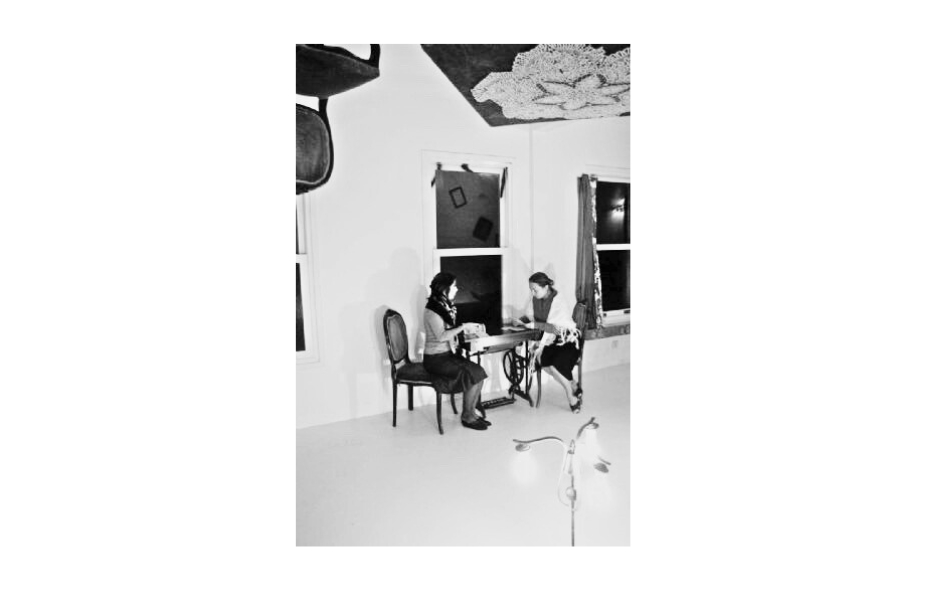
Within a 25-square-meter apartment, the relationship formed with an audience of fifteen at each performance intertwined environmental theatre with installation art. House: A Cacophonic Play not only offered its audience an unconventional viewing experience but also attracted invitations to numerous international festivals thanks to its distinctive design combining theatre and installation.
The production was presented at Hebbel Theatre in Berlin as part of the Now Festival, and later at Robert Wilson Raum in Wiesbaden within the European Biennial of New Plays selection.
After the Ve Diğer Şeyler Collective moved into a space in Galata and named it GalataPerform, the play also became the first production staged at GalataPerform.
GalataPerform
Established in 2003 on Büyük Hendek Street, the venue initially functioned as a rehearsal space and later as a performance venue. Within a short time, it evolved into an artist-run interdisciplinary performance space.
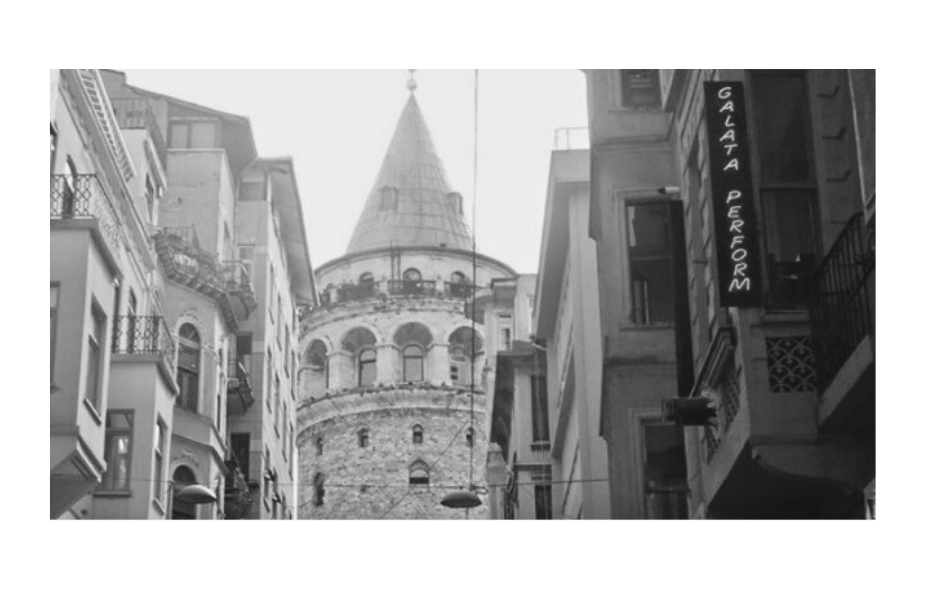
Located on the second floor of a historic building at No. 21 Büyük Hendek Street, stretching toward Galata Tower, GalataPerform quickly became an independent and internationally connected art space.
Between 2004 and 2012, the Visibility Project (Görünürlük Projesi) created an experimental platform that incorporated the street and the neighborhood into performance. With performances staged in shops, an unleavened bread bakery, abandoned buildings, streets, and cafés, GalataPerform redefined the very notion of the “stage.”
Over eight years, the project emphasized GalataPerform’s relationship with the local community, tradespeople, and cultural spaces in the area. Under the artistic direction of Yeşim Özsoy and in collaboration with performance artist Deniz Aygün, the project continued to grow. Each season began with a mapping of the neighborhood itself. The slogan of the project in 2011 was:
“Step Off the Stage!”
This slogan signaled not only a spatial shift but also a conceptual one.
In 2004, with the confidence of having a 40–50 square meter rehearsal space, the Ve Diğer Şeyler Collective participated in the International Istanbul Theatre Festival (IKSV) with the production “Aksak İstanbul Hikâyeleri” (Limping Tales from Istanbul). The play earned Yeşim Özsoy the Afife Theatre Award – Cevat Fehmi Başkut Prize for the Best Playwright of a New Turkish Play Staged That Year.
New Text New Theatre
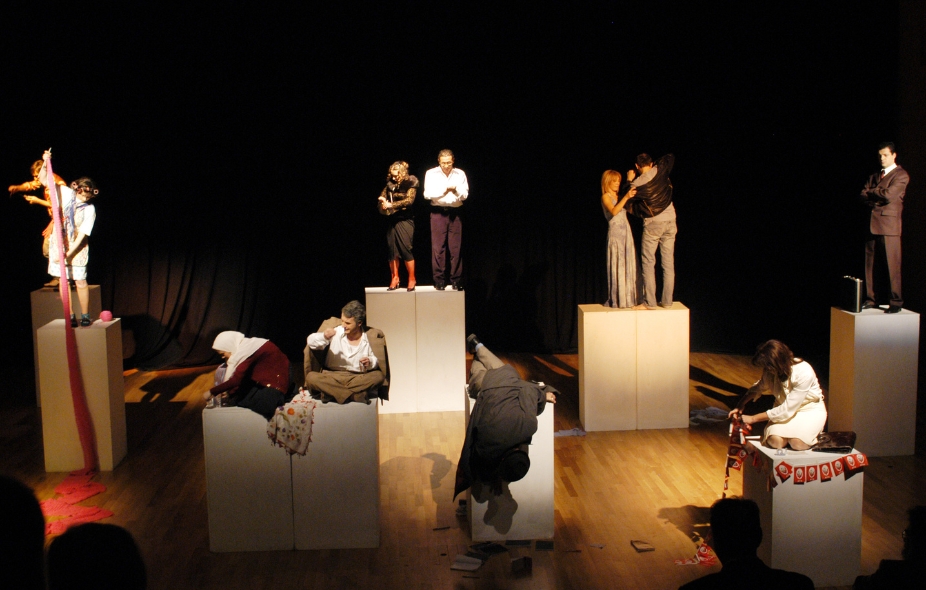
Launched within GalataPerform in 2006, the New Text New Theatre Project became one of the first comprehensive and sustainable initiatives in Turkey dedicated to supporting contemporary playwriting.
Kurucu ekibinde Mark Levitas, Ceren Ercan, Dilek Altuntaş ve Yeşim Özsoy’un yer aldığı projenin çıkış sorusu basit ama radikaldi: Türkiye’ye ait, günceli yakalayan, dünya ile iletişim kurabilen yeni bir tiyatro dili mümkün mü?
Over time, Okan Urun joined the founding team and became one of the key coordinators of the project. This period marked a phase in which the New Text New Theatre Project gained greater momentum and expanded significantly.
The project developed around four main pillars:
- Play translations and readings
- Workshops and talks
- International festivals
- Publishing and a digital archive
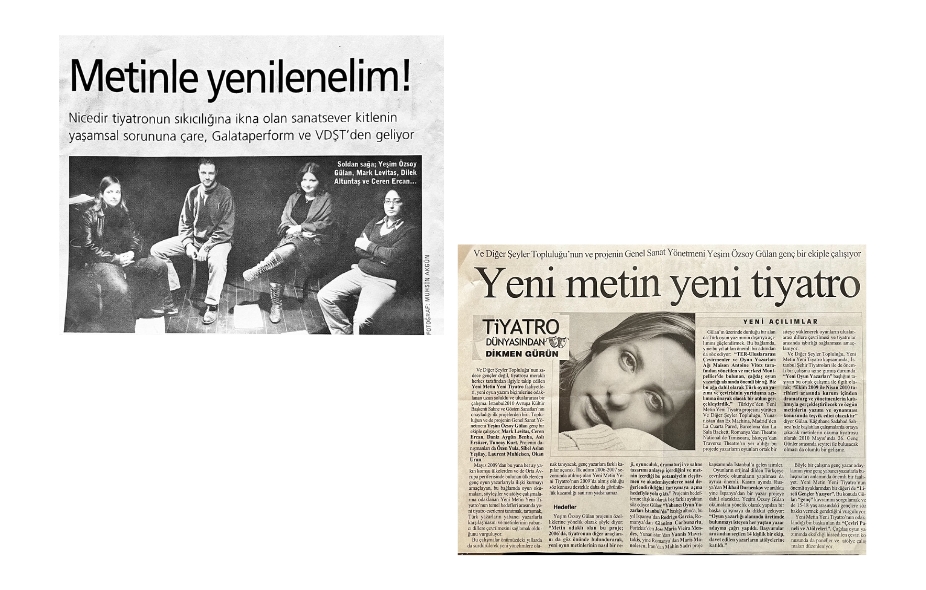
During the 2010 European Capital of Culture Istanbul programme, plays by six playwrights from six different countries were translated. The writers were invited to Istanbul, where workshops and staged readings were organized. Around the project, a dedicated audience began to form—one that followed contemporary playwriting within an international context.
This process contributed to the development of a play-reading culture in Turkey and helped cultivate a new audience for theatre.
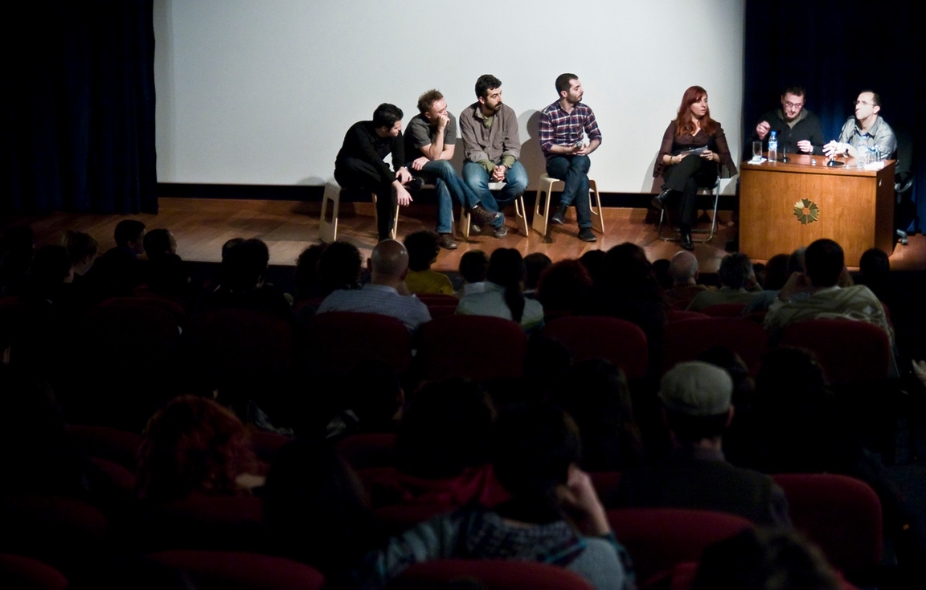
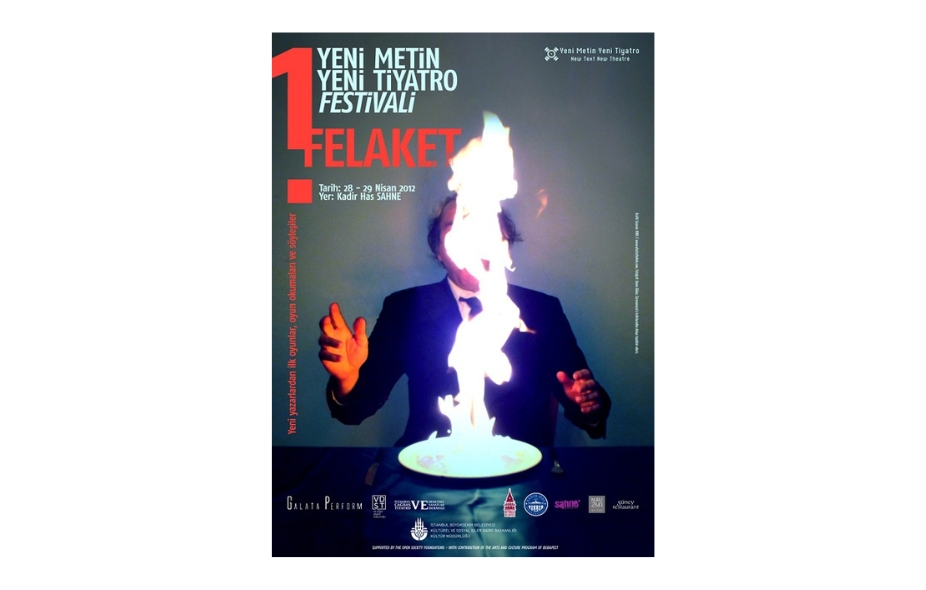
As this audience grew, the project also expanded, and in 2012 the New Text New Theatre Festivals were launched alongside the regular workshop programme. The project and the festival evolved into a platform where texts emerging from the workshops could meet the professional theatre field.
With themes determined each year — such as Disaster, Borders, Body and the City, Animal, Happiness, among others — the festival opened up not only new texts but also new ways of thinking for discussion. The theme of the first festival, held in 2012, was “Disaster,” proposed by Enzo Cormann, who had been invited that year to give a masterclass. The festival took place at Kadir Has University.
Within the festival programme, four short plays were presented as readings, while two short plays were staged as productions. In addition, French director Emmanuel Daumas directed a full-length play as part of the programme.
Over time, the workshop programmes evolved into a more comprehensive and continuous structure. Educational and workshop programmes were developed in Playwriting, Advanced Writing, Directing, Dramaturgy, and Technical Design.
During this period, many emerging writers wrote their first plays within the framework of the New Text Festival, presented them as readings, and later brought their works to the stage.
A significant milestone for the international visibility of New Text New Theatre came in 2011, when Ahmet Sami Özbudak’s play İz (Stain) received an award at the Heidelberger Stückemarkt.
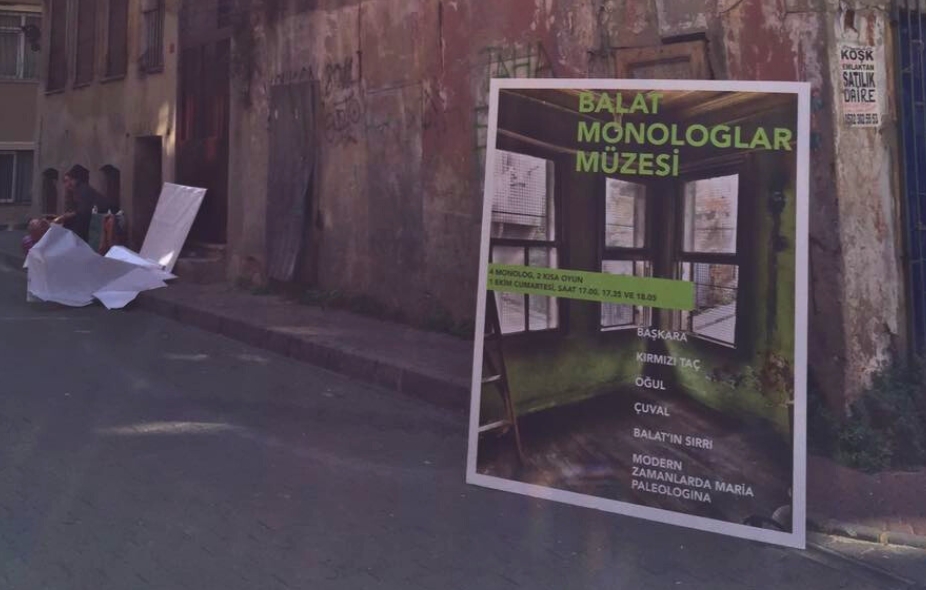
In 2016, a project realized by Ahmet Sami Özbudak as part of the festival in an abandoned building in Balat gradually evolved into a permanent structure: The Monologues Museum. Conceived as a museum-like experience of eight short plays, the project developed a distinctive model that engages with space while opening up a new production field for writers, and it continues its life as a long-term project.
Ahmet Sami Özbudak’s play; İz (Stain) stood out with a video installation featuring eight live cameras integrated into the GalataPerform space, alongside a site-specific “home” installation in Tarlabaşı. It was followed by Şenay Tanrıvermiş’s play Dil (Language), staged at GalataPerform and directed by Yeşim Özsoy.
Alongside works by emerging playwrights such as Ayşıl Akşehirli (Kabuk), Öznur Yalgın (When in Rome), Serdar Kurt (Ay Işığında Gökkuşağı), and Can Özden (Ailemizin En Güzel Sırrı), plays by invited international writers including Artur Palyga and Michal Walczak also entered the GalataPerform repertoire.
In 2018, Yüz Yılın Evi (House of Hundred), developed in collaboration with Ferdi Çetin, Yeşim Özsoy, and Maxim Gorki Theatre, became the GalataPerform production that toured internationally the most. The production received particular attention during its performances at the Edinburgh Fringe Festival, where it was featured in publications such as The Guardian and The Scottish Times.
From the same period onward, Ferdi Çetin, serving as Director of Workshops and International Projects, expanded the New Text New Theatre network with Nordic countries and helped bring additional partners from countries such as Hungary and Portugal into the programme. Ozan Ömer Akgül joined the team as one of the project’s main instructors and as the editor of the festival.
During this period, when the workshop programme and publishing activities continued to develop, “Abandoned Shores // Negative Photographs”, created by Ferdi Çetin for YeniPerform during the pandemic, was also added to the GalataPerform repertoire.
YENİPERFORM
With the outbreak of the COVID-19 pandemic in 2020, GalataPerform left its physical venue in Galata but continued its artistic production without interruption. Building on the publishing dimension it had been strengthening since 2016, GalataPerform launched “yenimetin.com”, Turkey’s first digital playwriting platform, with the support of the Goethe-Institut.
This initiative—Turkey’s first and only digital theatre platform—marked the beginning of a new phase for digital theatre, e-book publishing, and international collaboration. yeni-perform.com played a particularly significant role in sustaining both the festival and the project during the pandemic, when theatres and performance venues were closed.
Through its collaboration with Habitus Publishing, GalataPerform facilitated the translation of contemporary plays from Spain, Norway, Denmark, Sweden, and Portugal into Turkish, while plays by Turkish writers were published by Habitus.
Taking inspiration from institutions such as Royal Court Theatre, Traverse Theatre, and La Sala Beckett, GalataPerform developed a structure in Turkey that places playwriting at its core. Collaborations—particularly with Nordic countries, the programme “Writing on New Realities” developed with A Turma Theatre in Portugal, and partnerships with various cultural centres—helped the project gain visibility across Europe.
For GalataPerform, the visibility of women playwrights and the creation of space for their work has always been of particular importance. Many women writers who engaged with GalataPerform’s distinctive workshop practice have gone on to create lasting contributions to contemporary theatre in Turkey.
20 YEARS
In 2023, GalataPerform celebrated its 20th anniversary, alongside the 12th edition of the New Text Festival.
Since 2003, GalataPerform has continued its journey as an independent and international theatre platform: a space of production focused on new texts, an interdisciplinary performance venue, a structure that provides sustained support for playwriting, and a creative ecosystem that brings together both digital and physical modes of creation.