No products in the cart.
The Last World
2006-2007, 60’
summary information:
Our flight NUH 71/71 is about to crash! Please unfasten your seatbelts and prepare for impact!
“Man: I’m asking—where am I? Is there anyone else?
Woman: Shared thoughts. If I push my mind a little further, maybe I can reach something,
someone.
Man: If only there were a sign, or a board written in this or that language. Something.
I would know. It would be good to know something.
Third Person: I must be suspended somewhere. Between earth and sky. Between reality and imagination… On the plane. We were falling. And now… here I am.”
Somewhere on the edge of Europe, a plane crashes. Three people on board flight Nuh 71/71 find themselves, at the moment of impact, in a place they cannot define. They are unaware of one another. For a long time, they try to make sense of this undefined space. Are they dead? Has time stopped? Has the world come to an end? Where are they?
Referred to as Woman, Man, and Third Person, this trio is constructed around the much-debated East/West dichotomy, while also proposing a position that disrupts and dissolves this binary—“neither this nor the other.” The plane crash becomes a metaphor for a collapse that is anticipated, ongoing, or yet to come. The Last World seeks to offer an interpretation of the notion of the “end” through what these characters represent. Is it possible to end? Can the world truly come to an end? What does “the end” mean?
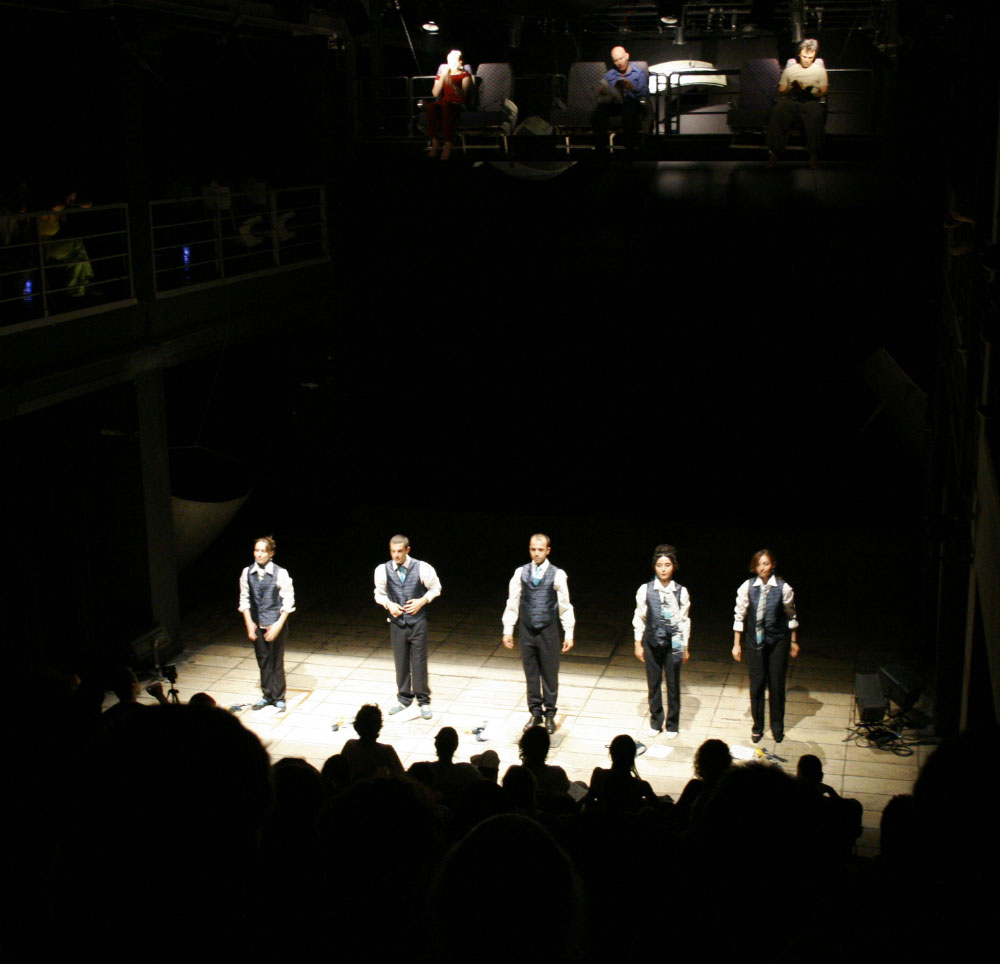
Premiering as part of the 15th International Istanbul Theatre Festival, the play immerses the audience first in the atmosphere of an airport and then of a crashing plane. It was also presented at the Bonn Biennale in Germany in 2008. The work can be read as a reflection on the clash of civilizations in the aftermath of 9/11 and on the possible collapse or fall of the world.
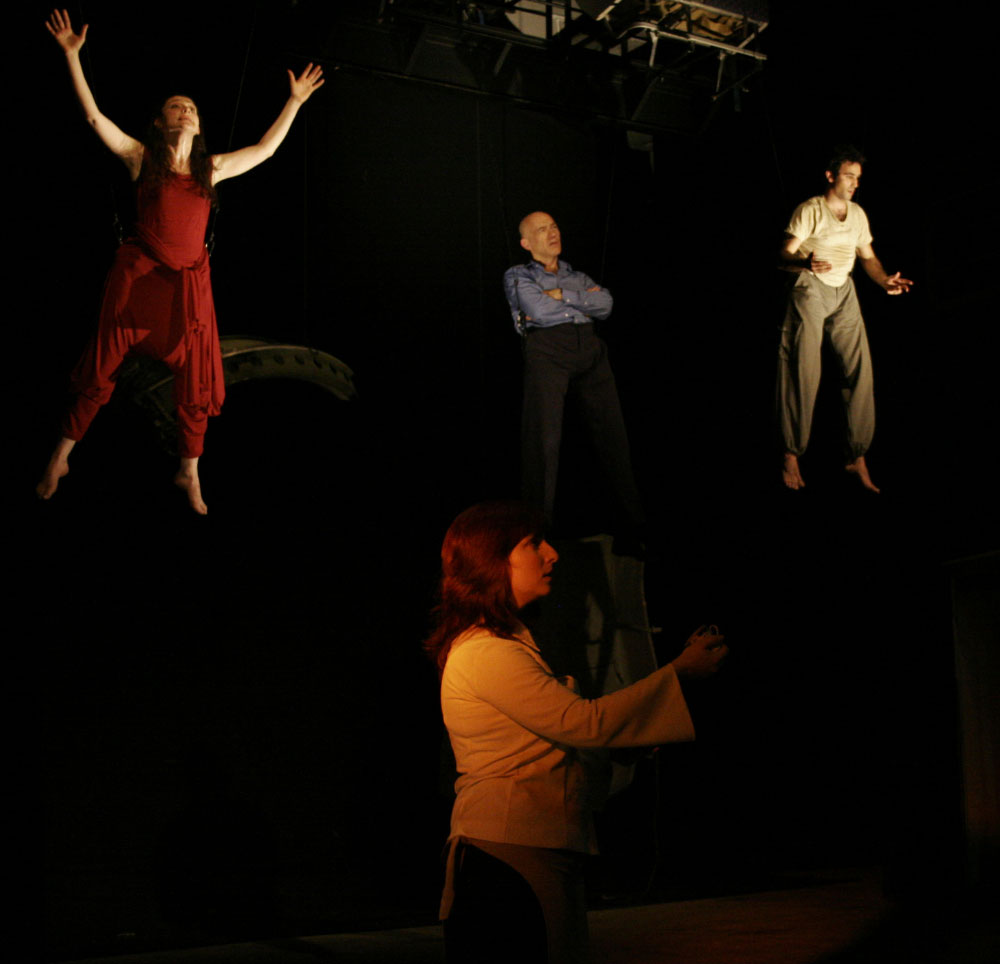
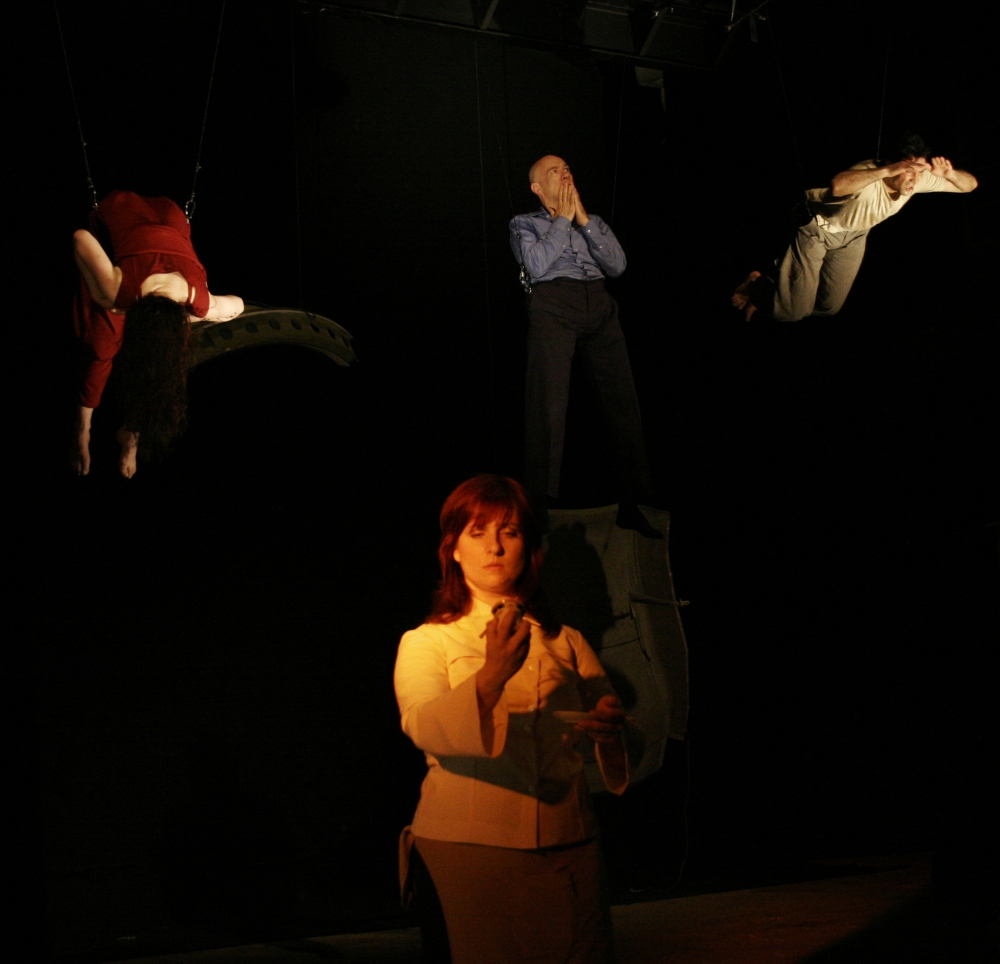
In The Last World, the actors perform suspended in mid-air through a special system, making the production a significant experiment in terms of performance. Drawing structural inspiration from T. S. Eliot’s The Waste Land, the text weaves references—from tarot cards to the Qur’an; from Indian, Turkish, Arab, and Persian cultures to Shakespeare’s Richard III and Hamlet; from Dante’s Divine Comedy to Mevlânâ; from Sophocles’ Oedipus Rex to the ghazals of Fuzuli; from Attila İlhan and Sevim Burak to water bills and what is considered the oldest love poem in the world, attributed to a Sumerian priestess—into its layered, everyday language.
The visual references of the production are based on contemporary artist Genco Gülan’s series Daily Mythologies, The Scream, and Whenever I Hear the Sound of an Airplane, who also designed the stage installation.
With this production, the Ve Diğer Şeyler Collective was awarded the Lions People’s Jury Innovative Theatre Award in 2007.
Written and Directed by
Yeşim Özsoy
Stage Installation
Genco Gülan
Costume Design
Burçak Ertem
Sound Design
John Plenge
Lighting Design
Enver Başar
Coordinator
Mark Levitas
Dramaturgy
Evren Erbatur
Assistant Director and Dramaturg
Pınar Yılmaz
Assistant Director
Dilek Altuntaş
Movement Direction
Tuğçe Ulugün Tuna
Movement Coach
Talin Büyükkürkçiyan
Technical Coordinator
Özer Arslan
Technical Team (Vertigo)
Cemal Nadir Tekel, Cihan Kuşçu, Duygu Güngör, Pınar Kırılmaz, Serkan Dadak, Tuna Türkmen
Photography
Aylin Özmete
Cast:
Woman: Perihan Kurtoğlu
Man: Ulgar Manzakoğlu
Third Person: Deniz Özmen
Narrator: Elif Ongan Tekçe
Pilot: Yıldıray Şahinler
Flight Attendants: Ege Maltepe, Ece Güzel, Yunus Emre Yıldırımer, Emre Yetim, Alper Saldıran
Supporting Institutions:
Kuzu Airlines, Vertigo Industrial Climbing Systems, Yeni Melek Performance Center
“One of the rare plays in recent times that has truly activated my thinking. With its powerful writing, strong performances, and experimental approach, it offers a completely unique theatrical experience. If Istanbul audiences miss this play, they will be making one of the biggest theatrical mistakes of recent years.” Yaşam Kaya, Tiyatronline
“With The Last World, Yeşim Özsoy Gülan once again pursues a new and profound theatrical language.” Üstün Akmen, Evrensel